The Tenant Experience Audit: What We Inspect Before Renewals Are at Risk
Keeping tenants starts well before renewal season. CTR Property Management explains how tenant experience audits catch problems early and protect renewals in large New England commercial buildings.
Tenants Decide Whether to Renew Long Before Their Lease Ends
Most renewal decisions take shape months — sometimes years — before the lease actually runs out.
A tenant might never say they're unhappy. They might not report every problem. They might not tell ownership they're quietly looking at other options. But they are always judging the building.
At CTR Property Management, we use tenant experience audits to spot small issues before they turn into renewal risks.
1. We Inspect the Arrival Experience
The tenant experience starts before anyone reaches the suite. We check:
- the condition of the parking lot
- signage and wayfinding
- exterior lighting
- sidewalks
- landscaping
- snow and ice conditions
- how clean the entrance is
- door hardware
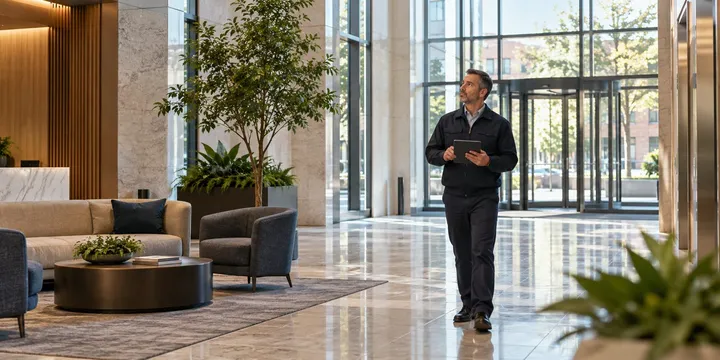
- how the lobby presents
Tenants pick up on whether a property feels organized, safe, and looked after. That matters most in office, medical, retail, and mixed-use buildings, where employees, clients, and customers use the property every day.
2. We Walk the Common Areas as a Tenant Would
Property managers can stop noticing common area problems simply because they see the building every day. CTR deliberately walks the common areas from the tenant's point of view.
We look at:
- restrooms
- elevators
- stairwells
- corridors
- lighting
- ceiling tiles
- flooring
- paint
- odors
- cleaning quality
- how consistent temperatures are
A stained ceiling tile or a dirty restroom may seem trivial, but tenants read those details as signs of how well the building is managed.
3. We Review Work Order History
Patterns in work orders tell a story. We look at:
- problems that keep coming back
- categories where response is slow
- items that remain unresolved
- each tenant's complaint history
- seasonal trends
- delays caused by vendors
A tenant dealing with recurring HVAC problems or slow repairs is at greater risk of leaving, even if they stay polite in everyday conversations. Good retention means catching frustration before it becomes a decision about the lease.
4. We Ask Direct Questions
When we check in with tenants, we ask:
- What's going well?
- What's frustrating your team?
- Are any maintenance problems recurring?
- Does the space still support how you operate?
- Are you growing, shrinking, or using the space differently?
- What would make it easier to stay?
Those questions uncover opportunities. Sometimes the fix is a small repair, a minor tenant improvement, a parking change, or a better way of communicating.
5. We Evaluate the Suite Itself
A suite can become functionally outdated even in a well-maintained building. We look for:
- worn flooring
- dated lighting
- inefficient layouts
- inadequate storage
- too few outlets
- limitations in conference rooms
- signage problems
- access control needs
Tenants don't always need a complete buildout. Often, one targeted improvement is enough to reset the relationship.
Final Thought
Keeping tenants isn't a renewal-time event — it's the result of day-to-day operations.
A tenant experience audit lets ownership see the building through tenants' eyes. That perspective is critical to protecting occupancy, reducing turnover, and building stronger NOI over the long term.